Young people should be able to encounter literature, experience a story as a whole and develop their own ideas about characters, language and conflicts. “Literatur, die ankommt” connects adapted classics with a coherent teaching pathway. Reading stages, discussion, tasks and appropriate support work together.
The English edition is intended for secondary classrooms where English is the main language of schooling. It uses internationally accessible British English. Teachers select the focus and support appropriate to their class.
Gottfried Keller’s Clothes Make the Man adds a novella to the series. English edition EN_V1_1 is intended for readers aged approximately 13–15 in English-medium education. German, French and Italian editions also exist. The work pages identify the audience and access arrangements for each edition.
Five perspectives on the approach
Access to literature
Accessible language, sustained reading and guided exploration help students with different reading backgrounds enter the world of a literary work.
Literary understanding
Close reading, discussion and interpretations supported by textual evidence deepen engagement with characters, conflicts and narrative choices.
Explore literary understanding
A coherent teaching sequence
The reading edition, classroom edition, handbook, portfolio, checkpoints and final project fulfil different roles within one learning sequence.
Differentiation
Shared key passages provide a common focus. Graduated support and extension activities offer different routes into the same work.
Foundations and development
The series distinguishes educational reasoning, the author’s classroom experience and findings that still need to be established through trials.
Explore foundations and development
Going further: the companion guide
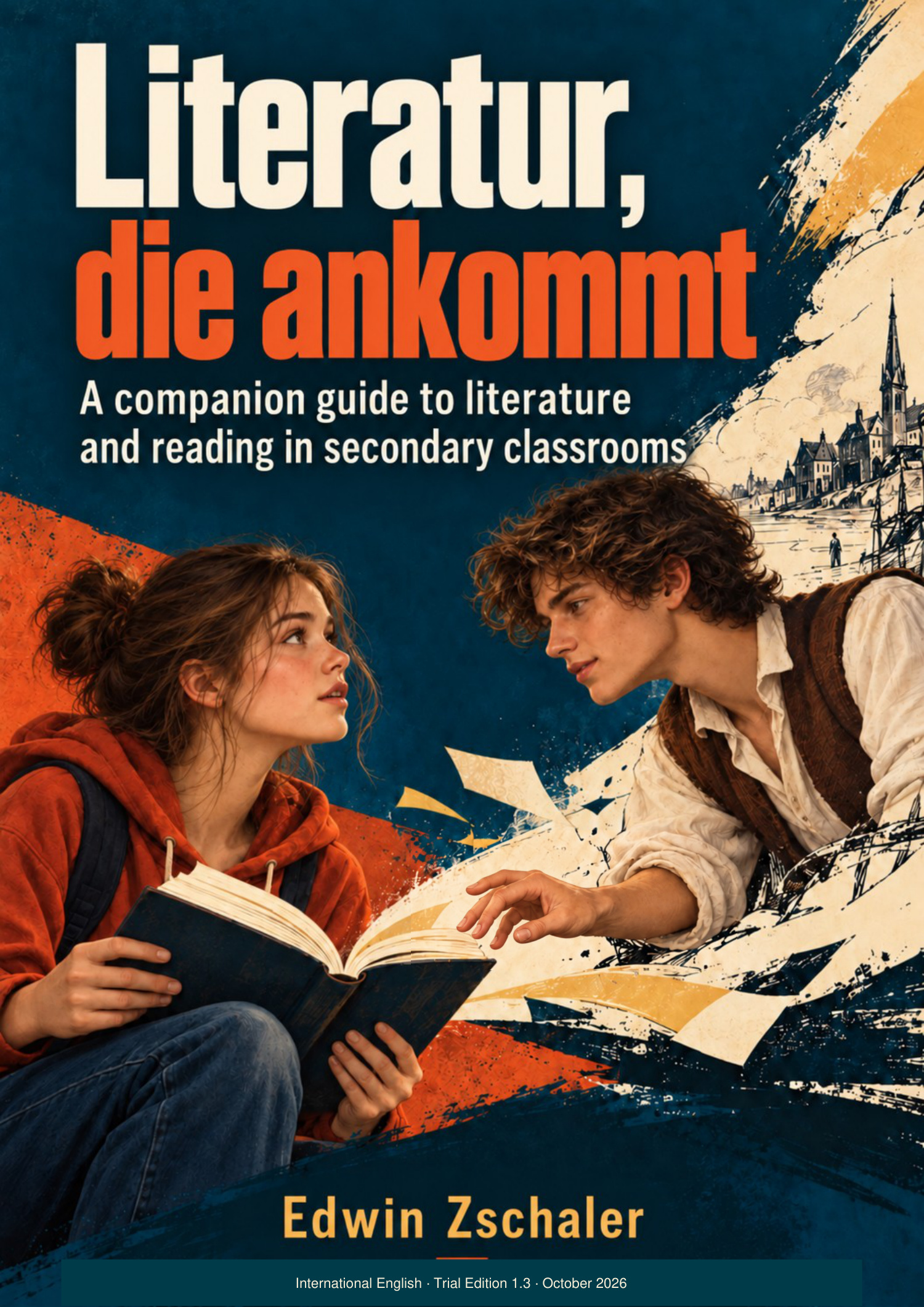
The companion guide sets out the educational foundations and practical examples behind the series. It connects research with decisions about text adaptation, literary learning and support for students with different starting points. Tom Sawyer provides a concrete example of how the approach is implemented.
For teachers and those involved in teacher education, the full guide offers a framework for choosing materials, providing appropriate support and adapting the plan to a particular class. It is intended to form part of the future publication offering. The website presents selected pages rather than the complete guide.
A look at the foreword
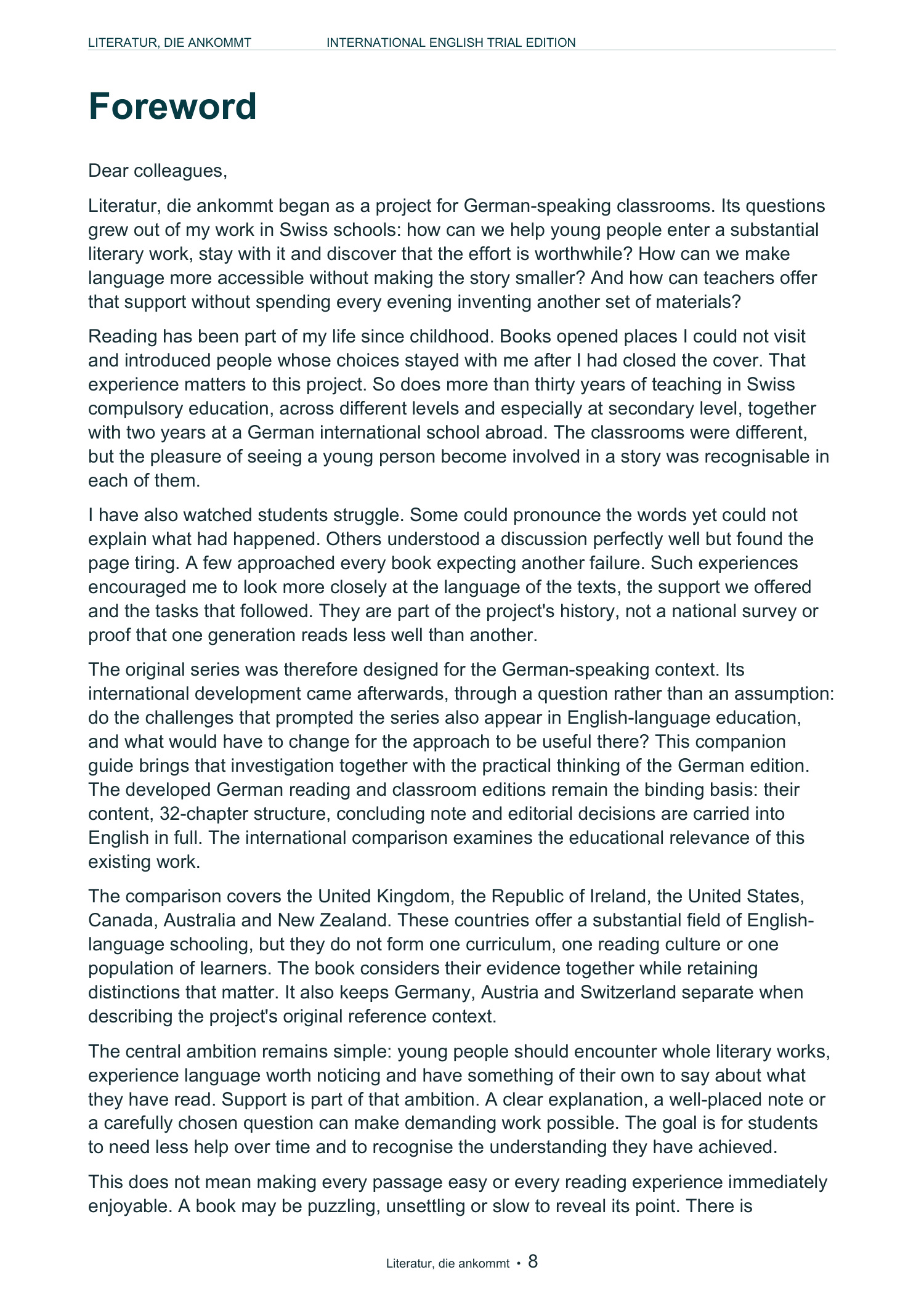
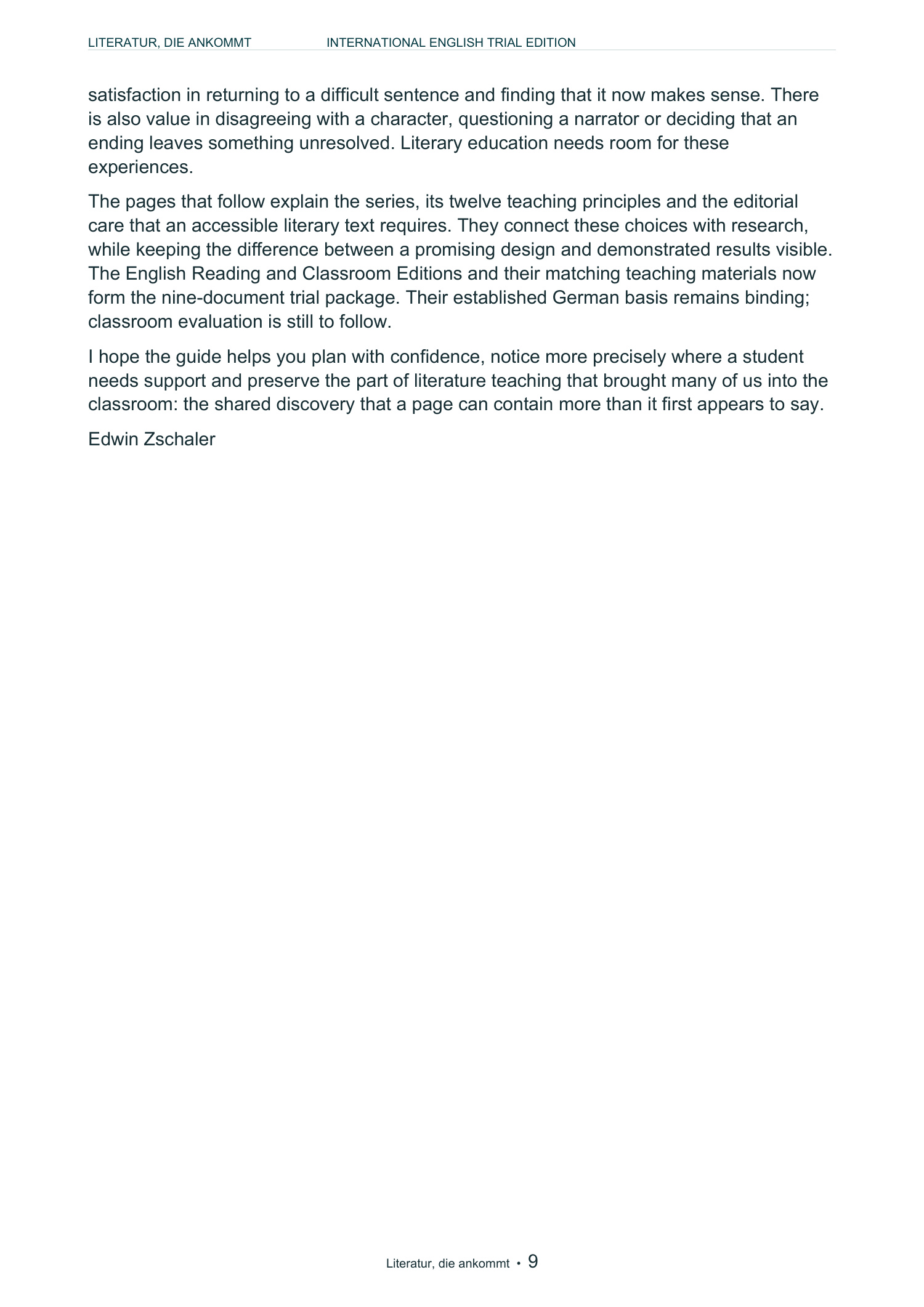
The opening pages explain how reading enjoyment, accessibility and literary challenge belong together. The English guide presents the approach for English-speaking educational contexts.
Foreword: the next page
The person behind the series

Edwin Zschaler · Teacher, author and editor
My enjoyment of reading began long before my first day as a teacher. Stories allowed me to enter unfamiliar worlds and meet characters who stayed with me after the final page. They also sharpened my attention to language: a precise phrase, the sound of a sentence or a joke that reveals itself on a second reading.
I want young people to have opportunities for these experiences. Thirty years in Swiss compulsory education, with lower secondary education as a particular focus, form the professional background to the series. Two years at a German international school abroad, where languages were central to my work, add another perspective.
In the classroom, I meet students with very different starting points. Some enter a story immediately. Others need help with words, connections or the demands of a longer text. I also see how perceptively young people observe and how independently they think once they have found a way in.
I am responsible for the concept, the German adaptation, the teaching materials and editorial decisions. The English edition is a translation of the project’s German adaptation. Classroom trials and professional feedback are essential to its further development: they should show what works, where difficulties arise and what needs revision.
My hope is that young people find something in their reading that matters to them - and a reason to turn the next page.